Proud partner

Proud partner
Article

Blogging – why doesn’t every business do it? That’s what we wondered too. After all, with a corporate blog, you can achieve much more than simply informing interested readers. In fact, blogging often forms the basis of a lasting relationship with your customers or users and can certainly contribute to lead generation. So why does blogging remain an activity that companies often only take up once they’ve already built up an extensive network of returning customers? This is probably due to a lack of information about the benefits and impact of blogging. Because once you hear about them, you too won’t be able to ignore the value of a blog.
In this in-depth article, we’ll take you through the five biggest benefits of blogging for your organisation. As part of your marketing strategy, blogging is a natural extension of, for example, your social media or SEO. How? We’ll explain.
Would you like to go straight to a specific section of this article? Then click on one of the links below:
What is a blog?
The 5 benefits of a corporate blog
Fancy starting a blog?
You no doubt have a vague idea of what a blog is. But what exactly is a blog? Write an article, post it on the designated online page and that’s it – a blog? Essentially, this is correct, but there is much more to a good blog than that.
So how do you start a blog? First of all, you need to know what information your target audience needs. What information can you offer that will genuinely be of use to them – without expecting anything in return straight away? In addition, there are a few other elements that make a blog a blog, namely:
• Online
It is no coincidence that the term ‘blog’ is a corruption of ‘weblog’. A weblog therefore essentially originated as an online diary, a log on the web, where you regularly post SEO-optimised content. Nowadays, of course, it is much more than that – but the term ‘blog’ has stuck.
• Interactive
The beauty of a blog is that you can seek out and even encourage interaction with your audience or target group. With a blog post, for example, you can provide your audience with tips and then ask them about their experiences after trying them out. You can also engage in conversation with your audience on topics relevant to your business. Readers are therefore often given the opportunity to leave a comment at the bottom of a blog post.
• Informative
As briefly mentioned earlier, a blog must, above all, be informative. This is how you create added value for your readers and encourage them to return to your platform. This does not necessarily mean information about your company, but rather about topics for which your service or product could provide a solution.
• Inspiring
Ideally, you want to encourage people to take action after reading your blog. The best way to do this is by inspiring them with your writing. Have you just outlined a problem for which you can offer a solution? Have you given tips on how to tackle a particular project? All of this ensures that your readers are ready for the next step in the so-called ‘marketing funnel’.

At Traffic Today , we use the ‘see-think-do-care’ model for our partners – a detailed customer journey based on customer needs at each stage leading up to conversion. The customer experience is central to this funnel.
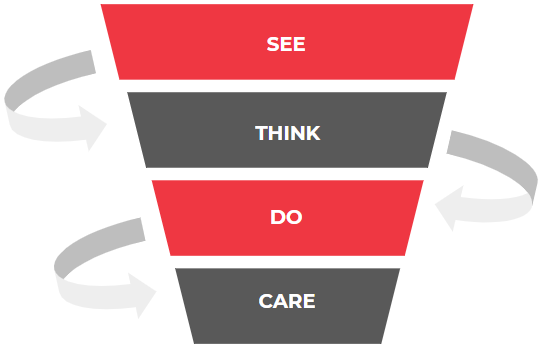
As each phase in this model involves different information needs, each phase also has specific communication channels that align well with these needs. For example, a blog is an excellent medium during the ‘see’ or ‘think’ phase. This is because the information required at this stage is still largely general in nature. The ‘what’ and ‘how’ questions must be answered at this stage, so that the ‘why’ can be addressed at a later stage.
With a blog, you provide your audience with information that is important for moving further down the funnel. If you skip the first steps, you’ll be leaving a large proportion of your potential audience behind.
Would you like to know more about this method? Read more about the see-think-do-care model here.
It’s fair to say that writing blogs is an art in itself, as there are content marketers who earn part of their living from it for good reason. But since you’re using this blog to get your bearings, we’ll explain step by step what you need to do to start writing blogs.
Before you start creating blog posts, you need to define the blog’s purpose. Companies operating in a niche market will primarily want to help returning customers, whilst more general online shops mainly use their blog to attract new customers. Incidentally, informing market experts requires a completely different tone of voice to that used for visitors who are entirely new to your product or service. Think carefully about this before you start typing away.
The vast majority of business blogs are written with the aim of attracting new visitors. But to draw those new visitors to your website, you need to choose a good focus term (or keyword). Avoid having important product or category pages compete with your own blog by selecting a different term. Of course, you can still link to these categories on the blog to pass on the internal link value.
To determine the ideal length for your blog post, take a look at what the competition is doing. Can you already make an impact on your topic with a simple blog post, or do you need to really put pen to paper to ‘outdo’ your rivals? Naturally, there are all sorts of other factors that determine whether a blog post ranks higher, but the word count provides a good indication.
The right information in the right place. That’s what matters if you want to create a logical structure for your blog. And that’s why it’s important to carefully consider what information the reader needs most. Is the information at the top really ‘need to know’ or is it more ‘nice to know’, and could the order of the information be rearranged? Also pay close attention to paragraph length to ensure the text remains easy to read.
Internal links are the driving force behind blogs. They ensure you make it clear to Google which products or categories are more important than the blog itself. When adding internal links, balance is key. Don’t go overboard with the number of links, but only add them where you genuinely think they’re needed.
Traditionally, CMS systems generate URLs for blogs automatically, which often results in a long string of numbers and/or letters. This is a shame, as Google uses the information in the URL to understand what the blog is about. So make sure you have a clean URL, free from truncated words and numbers. If you’re writing a blog post with a year in the title (‘The best marketing tools of 2023’, for example), then ‘/the-best-marketing-tools/’ is better than ‘/the-best-marketing-tools-of-2023/’, because you can retain the link value the following year and still change the title to ‘The best marketing tools of 2024’.
Now that you know what a blog is and how it can form part of your marketing strategy – also known as blog marketing – it’s time to highlight the benefits. These benefits are, in fact, worth mentioning.
Who wouldn’t want more website visitors? But how can you ensure these visitors end up on your website?
So how do you ensure that visitors land on your page without relying on adverts or an existing network? Simple: with a blog.
Just think about the number of pages on your website. There probably aren’t that many. And how often do you update these pages? Surely not every week. However, doing so would improve your website’s ranking. That’s why a blog offers a solution. Every time you write and publish a blog post, a new indexable page is added to your website. Later in this article, we’ll explain how a blog can have even more of an impact on your organic search results – but this is a nice bonus to start with.
Your blog also serves as a repository for ‘ social ’ media posts. Take an existing blog article and easily create multiple updates on various topics covered within it. In this way, you can convert the reach of ‘ social ’ media into traffic to your blog, and thus to your website.

Now that you’ve managed to attract new organic traffic to your website, you can convert this into leads. In theory, this step is relatively simple; by adding a strong call-to-action to your blog post, you encourage readers to take action. However, it is important that the call-to-action is relevant to the topic of your blog post. Looking at the funnel, this moment marks the dividing line between ‘think’ and ‘do’. How do you persuade your readers to take action?
Ideally, the calls to action on your blog should lead to content optimisation such as e-books, white papers, free trial packs, etc. At this stage, the focus is therefore primarily on the exchange of information; you offer information that is useful to your visitors in exchange for valuable contact details.
The best business blogs answer the questions of their target audience. If you regularly create content that helps your visitors, you automatically build authority amongst the right people. One example of this is Frankwatching, a specialist online marketing blog.
Yet building authority is not often used as a KPI. It is abstract and therefore a rather vague metric. Nevertheless, it does have a significant impact on your company’s performance. Just think about it:
In addition to the advantages mentioned above, a blog is, above all, a very strong long-term strategy. Writing a blog takes a little time, but it delivers more for your business every day it is online. A well-written SEO blog will, over time, rank higher and higher in search engines. You’ll, of course, need to keep track of how much traffic you’re generating and where you might need to optimise, but the foundations are in place. Your blog will therefore continue to drive new traffic to your website for weeks, months and even years – without you having to do much at all.
The effort you’ve put into writing a good blog post will therefore pay off in the long term. And not just a little, but many times over. The majority of your monthly website visitors will, in fact, come from older blog articles that you posted months ago. So make sure you publish evergreen blog posts that are relevant now – but also in a few months’ time.

Not every blog post you write will do exactly what you hope it will, but if just one in ten of the blog posts you publish manages to achieve a strong position in the search results, you’ve struck gold. So don’t let yourself get discouraged if your blog hasn’t yielded much after a few weeks, or if an article isn’t picked up by search engines. Keep writing and keep optimising, with the primary aim of providing your audience with relevant information; the rest will follow naturally.
On your blog, you can show what your business really stands for. You probably have space on your website for a few USPs, a short ‘About Us’ page and a few reviews here and there. On your own blog, you can include as much information as you like! For example, weave your mission and vision into topics relevant to your business, product or service so that your audience can really identify with your proposition. Struggling to find a good topic? Then have a look at the answerthepublic website. This website helps you find a topic based on search queries.
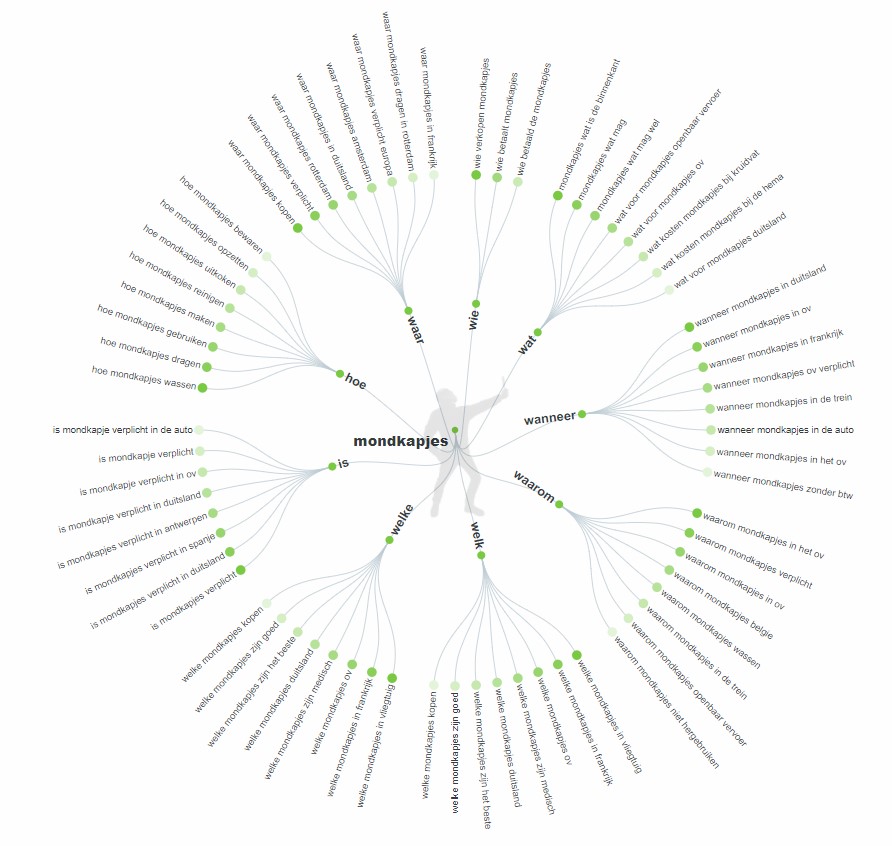
Through your blog, you demonstrate your expertise; by subtly sharing your knowledge with your audience via your articles, you steadily build authority amongst your target group. This strengthens trust in your brand, which in turn leads to a top-of-mind position amongst exactly the right people.
Would you like to see an example of a blog post before you start writing articles for your own website? To see an example, we recommend you take a look at the blog page at Traffic Today . To raise awareness of our marketing services, we too do our very best to write high-quality articles that rank well on Google!
Would you like to experience the benefits of a blog for yourself? We can help! Our content marketers have extensive experience in writing blogs and can also write the blog articles you need to build up your platform.
Would you like to read more about blog marketing? Then take a look at one of these blog posts:




Our team is
ready to help you

