Proud partner

Proud partner
Article

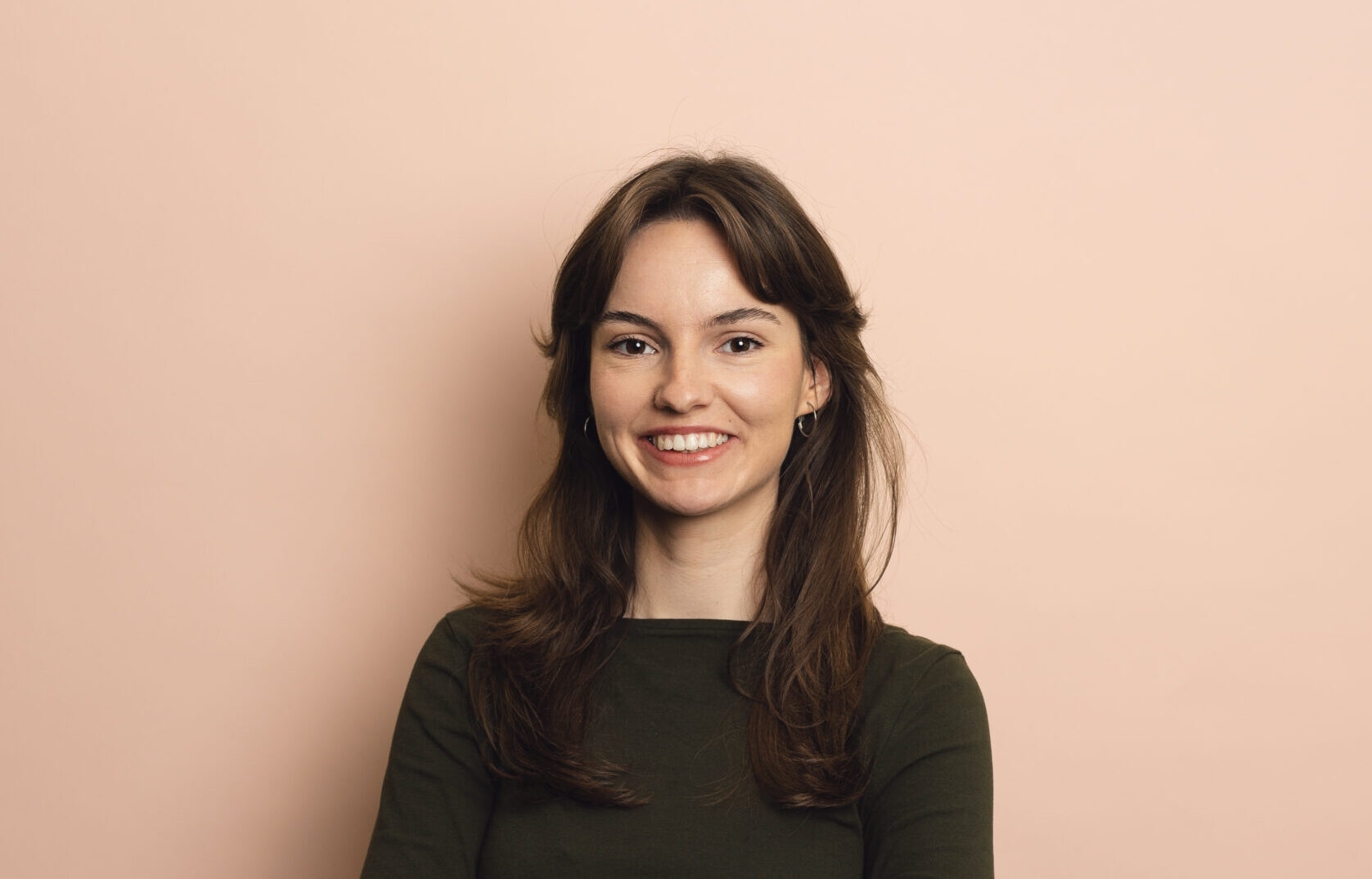
In our ‘Today’s Talk’ series, we speak to one of our specialists about a trending topic. This time, our colleague Sterre joins us. We’ll be discussing the creation and use of AI visuals with her.
“I actually use AI visuals for all my clients, but never in the same way. How I use them always depends on their needs. Sometimes I use AI to enhance or optimise existing content. In other cases, it’s actually a way to create something that doesn’t exist at all yet.”
A great example is the cat food brand PetMates. For that brand, we developed our own AI character: Tofu. With Tofu, we’re building a fantasy world centred around storytelling. It’s not about directly selling cat litter, but about connection and brand recognition. Because Tofu keeps reappearing across various communications, a recognisable style emerges that doesn’t feel like a traditional advert. AI gives us the freedom to respond quickly to trends and develop creative ideas that would otherwise be difficult or costly to implement.”
“Although virtually anyone can generate an image using AI these days, that doesn’t automatically mean the quality is good. For me, the process always starts with the key question: what do I want to communicate? What image do I want to convey?”
I first visualise the idea in my head. Can I make that image concrete? Can I describe exactly what I see? I then use Gemini to further refine my concept. I ask critical questions about my own idea: how can I formulate this more specifically? What details are still missing? Only when that’s right do I enter the prompt, for example in Nano Banana.
But it doesn’t stop there. I also consider the technical details: what is the camera quality? Which lens is being used? From what angle is the footage being shot, particularly for video? The more realistic and specific your description, the stronger the end result.
Then the analysing and refining begins. What isn’t working yet? What could be improved? Does the prompt need to be more precise? Should references be included? I really see it as a collaboration between myself and AI. Sometimes I help the AI, sometimes the AI helps me; the creative input has to come from yourself. If you say, ‘create a 50-year-old man’, everyone has a different image in mind. Your brain automatically fills in details such as clothing style, posture or demeanour. You need to make those implicit details explicit. The better you describe what you’re visualising, the stronger the end result.”
“What I’m seeing is that human-centred content is actually gaining ground again, both in adverts and in organic feeds. Whereas everything used to have to fit neatly and perfectly within the corporate identity, there is now more scope for authenticity.”
People sometimes find it hard to tell what’s real and what isn’t. That’s why I believe human-created content remains important for building a genuine connection with a brand. I see AI visuals primarily as a powerful tool further down the funnel, for example for branding visuals, dreamlike worlds or creative backgrounds. By that stage, the target audience is already engaged and AI can enhance the brand experience.
Many people still imitate one another in their use of AI. Those who deploy AI thoughtfully and creatively can actually enhance human-generated content rather than replace it.”
“First, ask yourself: why do I want to use AI? Do I want to improve content, solve a problem or fill a gap? Does it really make my product or service more visible? Only once you’ve clarified this can you decide how to use AI. It’s not just about the tool, but above all about the creative choices you make yourself.”




Our team is
ready to help you

