Proud partner

Proud partner
Article

We’re back in the game and that’s great, but how do you ensure you’re making your mark in the world of online marketing? We’ll explain how you too can reap the benefits of our guaranteed success at the Women’s World Cup in France. That way, it’s not just our Lieke who’ll be scoring this summer – your business will too!
Responding to current events is one of the first lessons an online marketer learns. What is your target audience focusing on today? What’s on the agenda? In short, what issues do you need to focus on to connect with your potential customers? It’s the best way to draw attention to your product or service by capitalising on a major event. As an entrepreneur, this should come as no surprise to you. We don’t need to tell you that you’ve already filled your social media calendar with special holidays, theme days or festivals that your target audience is sure to attend this summer – or at the very least, is interested in. You’re the first to make a clever online connection with what you actually want to sell.
Sounds simple! Yet it is important to map out such commercial opportunities carefully in advance. After all, such an opportunity often only comes along once in a while. Take the Women’s World Cup, for example. Following recent successes, more Dutch people than ever are keen to see ‘our’ ladies succeed. According to a survey by the KNVB, two in three Dutch people say they are interested in how the Women’s World Cup is going for the national team. We already saw viewing figures rise during the European Championship as the team’s success grew. However, this target audience differs from that of the – less successful – men’s team. The Oranje Leeuwinnen are attracting more families with younger children to the stadiums. And in particular, girls aged around ten. The stadiums and the football association itself are already responding to this by making the supporters’ sections more playful and scheduling matches earlier in the evening. Major brands have also taken a close look at this new group of football supporters and clearly see the potential in this fan base.
No fewer than twelve major organisations have signed up to support the Women’s World Cup. These include the KNVB’s long-standing partners such as ING, Nike, KPN, the Nederlandse Loterij and PWC. Women’s football partners such as Unilever and Intersport are also on board. Commercial partners Coca-Cola, Heineken and Sunweb are specifically targeting the fans. Young girls can collect plenty of figurines of their heroines and are inundated with images of their footballing role models. Sunweb will, of course, be presenting the women’s match schedule in France, along with the cities where the matches will be played. With just one click, you’ll be taken to bespoke packages that not only include attending the match but also provide transport and accommodation. You can also win these tickets by buying two promotional products – Coca-Cola, Fanta, Sprite and/or Fuze Tea – and handing in your receipt. Busy family? No problem! A programme has been put together to ensure you’re back home within 24 hours. Albert Heijn is putting Maan on the centre spot for a catchy sing-along. A smart move, given that the singer has a sizeable following among the same target audience.
Fortunately, you don’t have to be called Albert Heijn to reap some of the benefits of our orange success. Even as a smaller business, there are clever ways to attract attention during the World Cup. Think of targeted, small-scale advertising in the form of various online adverts. Below, we explain the best way to go about this and highlight the potential pitfalls that could cause you to miss the mark.
As with all campaigns, timing is crucial. Know when to launch a campaign and also what your competitors are doing. Naturally, you don’t want to be the third brand to launch a similar campaign targeting the same audience. It’s important to assess in advance to what extent an event – in this case, the Women’s World Cup – is relevant to your company or brand. A content calendar can help you create an overview of key events over a specific period. This way, you’ll be aware of what’s coming up and when, and you can set up a campaign in good time.
It is also important to learn from past campaigns. What successful campaigns have you run in the past, and can you apply those to the Women’s World Cup? And which campaigns were unsuccessful and should therefore not be repeated?
When it comes to events and happenings, it’s important to be able to respond quickly. Running a discount promotion fits in perfectly with this. Offer a temporary discount of, say, 15 per cent to celebrate progressing from the group stage with a 15-goal lead. You could also offer discounts on products linked to football and/or the Dutch national team. For example, offer a discount on orange items such as an orange chair or suitcase.
social You can then communicate this campaign to your target audience online via your own website, social media, adverts (Google, Bing, etc.) and through email marketing.
Ask (potential) customers to predict the result of the Dutch women’s football team’s match or the final standings in the group. The person who predicts correctly wins one of your products. You should choose products on which you have a good margin but which are still attractive to your customers. You can set up this promotion via Facebook, for example, and ask people to ‘like’ the page and post their prediction in a comment.
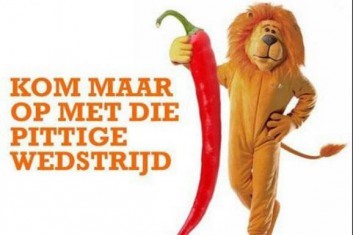
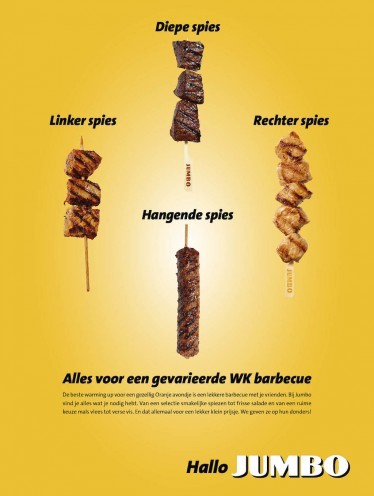
A campaign can also be successful without directly focusing on generating extra turnover, as is the case with a discount promotion. In such cases, the aim is to build reach through a post with a touch of humour. For example, Jumbo once capitalised on the World Cup with this ‘line-up’ of kebabs, whilst ING was fully prepared for the ‘spicy’ match.




Our team is
ready to help you

