Proud partner
Proud partner

On Wednesday 6 February, Advertising Marketeer Marc visited Friends of Search, an international event for search experts. Curious to find out what was discussed and what the highlights of this event were? You can read all about it in our blog.
The day began with a look back at the changes in search engines over the years and a glimpse into the future. This brief retrospective makes us realise just how fast things move in the world of search engine marketing. Paid search results have only been around since 2005. Fast forward to 2019 (14 years later) and we have automated bidding, Google’ Shopping, and so on. This proves once again that the online landscape is constantly changing.
We are currently in the era of ‘ Artificial Intelligence ’, made possible by the increasing computing power of the cloud. According to James Whittaker (Microsoft), the computing power of the cloud doubles every two years. In addition, conversational user interfaces – driven in part by voice search – are rapidly gaining ground. Augmented reality is also improving all the time; consider, for example, consumers who use AR to gather visual information before making a purchase.
How does AI work? We answer that question in this blog.
As mentioned, Voice Search is on the rise. According to Lee Boonstra (Google) and Christi Olsen (Microsoft), Voice Search is currently used primarily to answer a question. No separate data on Voice Search can currently be shared, as voice commands are converted into search queries by Google and Microsoft. Amongst our current search terms in Google or Bing Ads, we can identify voice search queries by the following search terms, which are usually longer than 3 to 5 words: ‘how’, ‘what’, ‘why’, ‘how much’.
With a handy tool like DialogFlow, you can already start capitalising on Voice Search. DialogFlow is a handy tool for facilitating a conversation between you and the Assistant. This makes it easy to convert existing FAQ pages into a spoken conversation between a person and the Voice Assistant. At present, voice search is mainly used for simple tasks, such as answering a question or retrieving information from the web. An opportunity for businesses is to create actions for the voice assistant that users can carry out on your website via the assistant, such as booking a hotel room or reserving a table at a restaurant. In addition, voice assistants can help foster an emotional connection between the customer and the business through spoken interaction.
As the computing power of the cloud increases, the role of the online marketer is also changing. Frederick Vallaeys, owner of the smart online marketing tool Optmyzr, argues that the work of online marketers is shifting from manual optimisation to the management of Artificial Intelligence. Big data is what it’s all about. In addition to online data from sources such as Google Ads, it will remain important to collect internal data as well and use it to feed these smart systems. Frederick Vallaeys is convinced that self-driving cars will be on the roads before PPC campaigns run entirely on autopilot. As well as being a PPC expert, Frederick Vallaeys once again demonstrated the usefulness of a voice assistant by asking it to retrieve some performance metrics from his Google Ads account.
Koen Vanderhoydonck, an automation specialist at Google, also believes that machine learning will completely take over bid management from online marketers in the short term.
Both conclude by saying that standing still and doing nothing is not an option; machine learning will become more powerful. They therefore advise working with it rather than viewing it as a threat. Given that AI doubles in capability every two years, we must also continue to test; what hasn’t delivered the desired outcome today could be the key solution for your business in a year’s time.
Jelle Sybesma, interim e-commerce manager at HEMA, has taken on the challenge of connecting the offline and online worlds. He faced the difficult task of replacing the offline leaflet with online adverts: “58 per cent of offline sales are influenced by online marketing.”
Through a pilot project involving various branches, HEMA began testing the replacement of its offline leaflet with online adverts. Using Display, Search and Social channels, personalised adverts were deployed that aligned with the consumer’s customer journey. Stores that took part in the pilot saw an increase in turnover. The next step for HEMA is to test the combination of offline and online channels’ impact on offline turnover. An interesting case that proves that, with the right resources, we can merge offline and online channels. In HEMA’s case, online adverts led to an increase in offline turnover.
In addition to the changes within the online landscape, the team at Wolfgang Digital shared a few interesting tips on conversion optimisation.

It was a well-organised day for SEO and SEA specialists, featuring (international) experts who presented interesting case studies in various rooms. The day concluded with light refreshments, and we returned home with plenty of new information and inspiration. We will certainly be attending again next year.
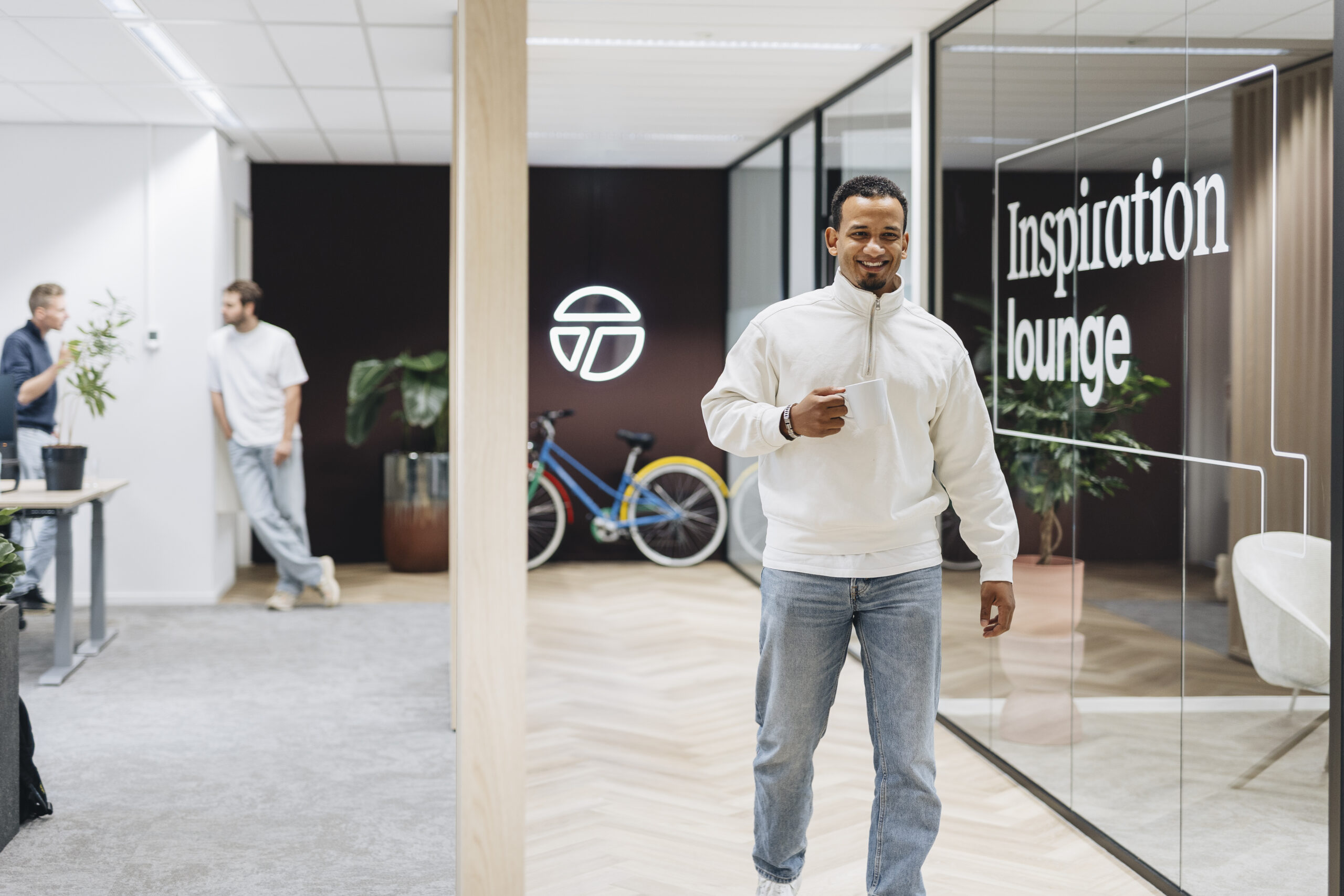
Curious to find out how we apply this new information in our day-to-day work to achieve greater success for our clients? Please feel free to get in touch or pop in for a cup of coffee.


Our team is
ready to help you