Proud partner

Proud partner
Article
Summary


The world of online marketing is sometimes described as being particularly dynamic, due to the many changes taking place. These transitions are often accompanied by concepts that emerge out of nowhere, as is the case with ‘zero-click search’. ‘Zero-click search’ is a relatively new term in marketing, which requires a different approach from marketers. Although zero-click search reduces organic traffic to websites, it also presents opportunities. In this blog, Traffic Today explains what zero-click search is and how you should deal with it.
Zero-click search is a new form of search whereby users receive immediate answers to their questions without having to click through to a specific website. Instead, the search engine, such as Google, provides relevant information directly on the search results page, also known as the SERP. This can range from answers to questions, short summaries, graphs and tables, to even direct, action-oriented steps, such as weather forecasts, exchange rates, calculations and more.
This shift in search behaviour is the result of search engines becoming increasingly adept at understanding user intent and delivering immediate, actionable information. Whilst this offers convenience for users, it can pose a challenge for websites, as traffic to their pages may decrease if users find what they need within the search results themselves.
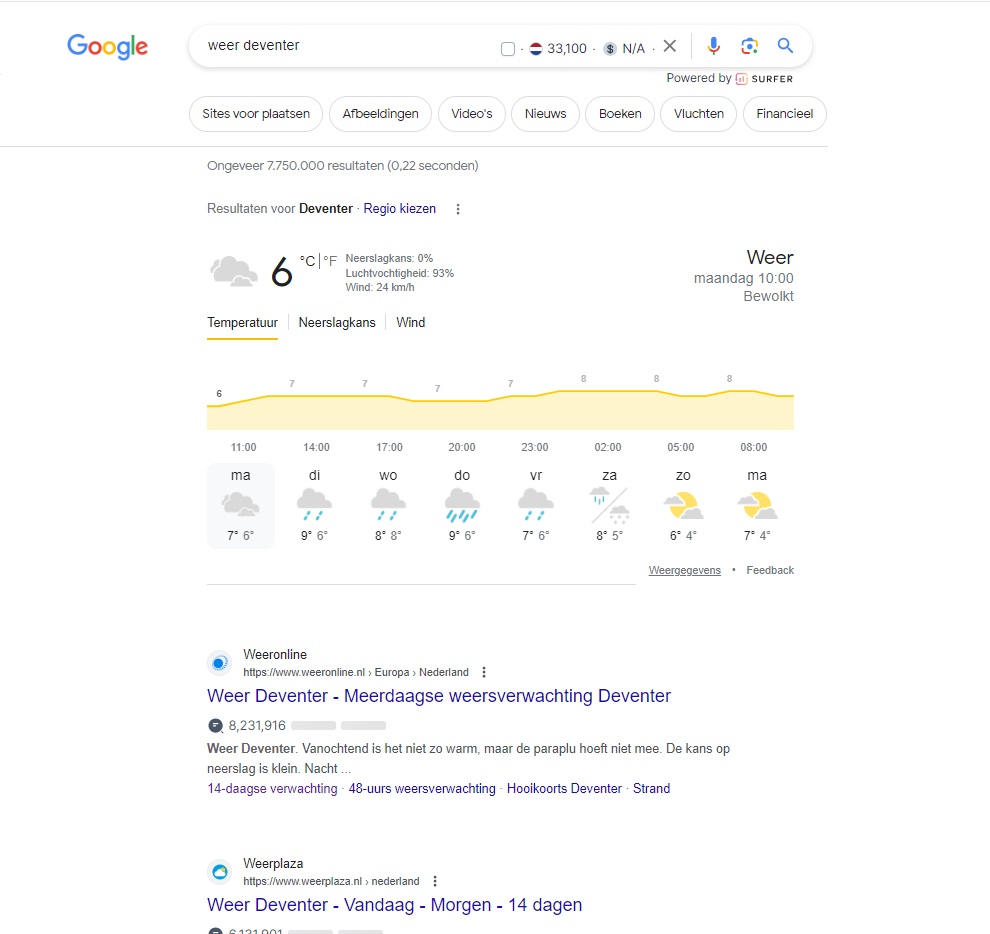
There are countless examples of Google zero-click searches. The list is so long, in fact, that it is impossible to describe them all. Below are a few examples:

It is important to realise that your queries may also be included in zero-click searches. Optimising content for structured data and other zero-click search results can be a strategy for maintaining visibility. Although zero-click searches are becoming more important, this does not mean that Google will never again prioritise regular organic results.




Our team is
ready to help you

