Proud partner

Proud partner
Article
Summary


Although anyone involved in SEO knows what link building is, the concept of ‘tiered link building’ is far less well known. It’s high time to change that. Because although the practicality of tiered link building is a point of debate amongst SEO marketers, there are certainly a number of major advantages to using this technique. You can read more about it here.
The aim with tiered link building is also to achieve the highest possible link value for your page. Tiered link building works as follows: you create backlinks for your backlinks. In doing so, you build different layers, with a connection always being established between these layers. This sounds rather technical, but it actually means the following:
In practical terms, tiered link building means that only the backlinks in tier 1 link directly to your website. These are of the highest quality and strengthen your link profile. Tier 2 links to a page containing an article featuring your link, and tier 3 links back to that page. The aim of tier 2 is to strengthen the link value of tier 1. As the link value of tier 1 has a major impact on your own website, this also strengthens the position of your own main page. Thanks to tier 3, the value of tier 2 is further increased. Ultimately, this indirectly improves the value of the tier 1 link and the backlinks to your own site. Tiered link building is therefore essentially a kind of inverted funnel.
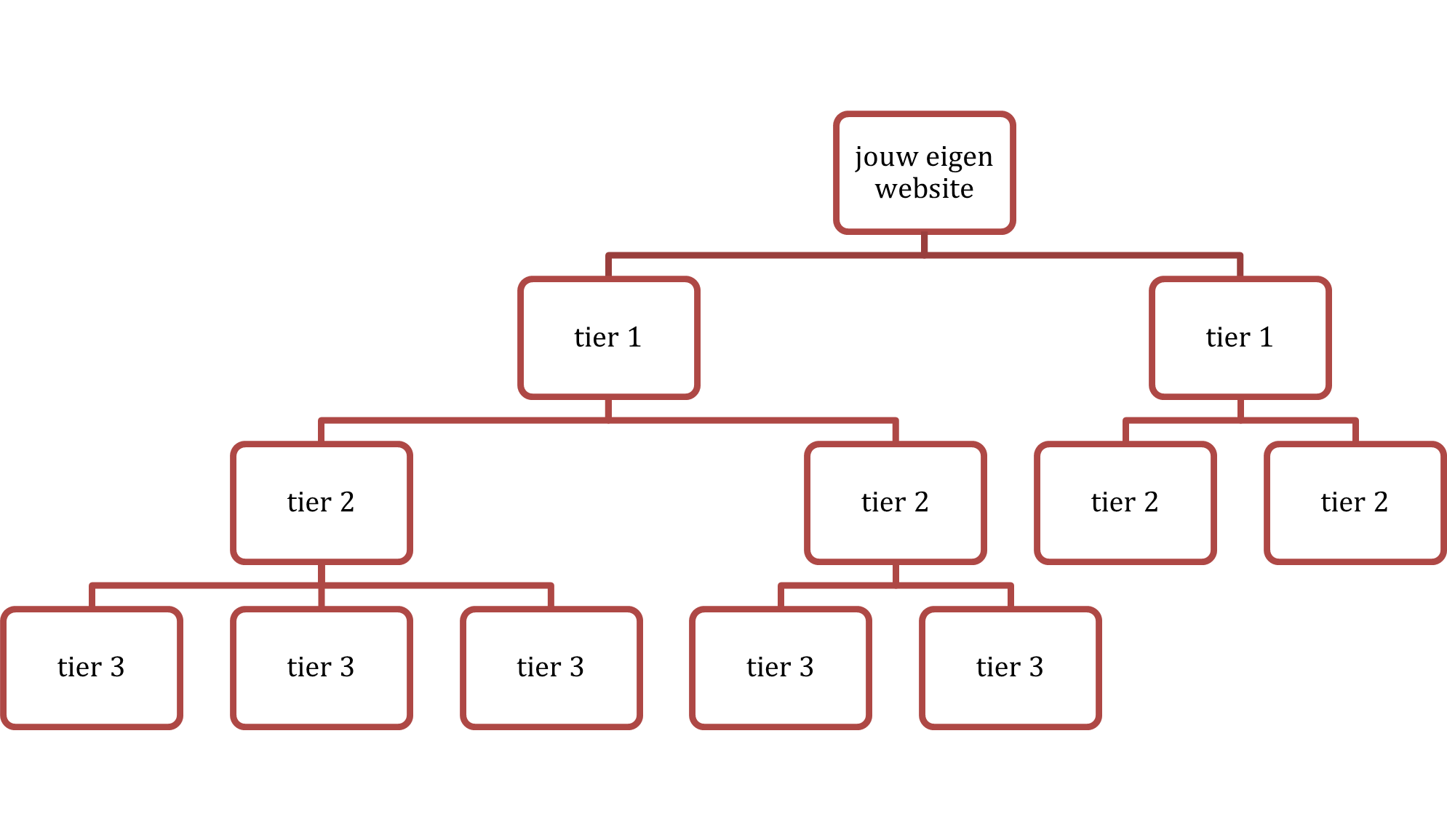
In tiered link building, it is therefore important for tier 1 to choose a site with high domain authority. These include, for example, news websites or blogs. Tier 2 links can be placed on other relevant and less relevant websites. You can do this yourself, or ask the owners of the guest blog website to assist you. For tier 3, quality is far less important, although you shouldn’t just go for low-value links. Homepage links or other links that you can buy in bulk are, amongst other things, a good option for tier 3.
The biggest advantage of this approach to link building is actually the increased value of tier 1 backlinks. This ensures that Google rates your website more highly, enabling you to achieve better rankings. But tiered link building also generates more website traffic. This is because people often click through when there are links in an article. Especially if their curiosity has been piqued, they’ll want to see what lies behind the link. Ultimately, this will lead them to your page.
Another advantage is that you only allow high-quality backlinks to link directly to your website. You can use the less effective – and, moreover, cheaper – backlinks for tier 2 and tier 3. It is also easier to find suitable sites, because for tiers 2 and 3, relevance – unlike for tier 1 – is far less important. Because you link from the tier 2 site to the blog post on the tier 1 site, you also drive traffic to the host website. This isn’t just good for their search rankings, but also for their website visitors. As a result, these sites are more likely to publish your blog post, as there’s a benefit for them too. Finally, your blog post is published more quickly on tier 2 and tier 3 sites because you’re linking to a guest blog post rather than directly to your own page.
Whilst tiered link building certainly has many advantages, there are also a number of drawbacks, which we’ll briefly discuss here. You do need to ensure that you’re investing in the right backlinks and not spending more money than necessary. Tier 1 links, in particular, will come with a higher price tag, as you’re really focusing on quality rather than quantity here. You must also ensure that you apply the technique of tiered link building correctly.
With standard link building, you’re actually only carrying out step 1 of the tiered link building technique: namely, placing links via guest blogs on other sites. This quickly becomes a matter of quantity, with quality being lost sight of. By also having links point to the tier 1 sites, you can increase the domain authority of these sites and thereby build a stronger link profile for yourself.
As standard link building is very time-consuming and does not always pay off in the long run, tiered link building can be a useful addition in this case. You can use tiered link building in the short term to achieve quick results. Whether tiered link building is really right for you is a personal choice. Some SEO marketers are firmly convinced of its value, whilst others see it more as an outdated technique that’s best consigned to the dustbin. If you do decide to use it, it’s certainly worth doing so carefully to ensure you actually achieve your goal – creating higher link value for your page.




Our team is
ready to help you

