Proud partner

Proud partner
Article
Summary


You may well recognise this scenario: you want to reach your entire target audience as effectively as possible, but who exactly is your entire target audience? Through target audience segmentation, you ensure that you reach the various groups as effectively as possible. In addition, you ensure that the impact of your message is as high as possible. We’ll explain how target audience segmentation within your customer base can help you improve communication with your customers and make your interactions more personalised.
Before we tell you more about applying target audience segmentation, it’s worth understanding what it means. Segmentation is the process of dividing a market into specific parts (also known as sub-segments). You can choose to segment based on factors such as age, education, gender or occupation. By segmenting, you tailor the message to each sub-segment. This creates greater impact, as you respond more specifically to the customer’s needs. You can segment by using the target audience segmentation model: the SDP model.
Target audience segmentation is sometimes confused with market segmentation. The difference is that, with target audience segmentation, you focus on how you communicate with your target audience. With market segmentation, you focus primarily on selling products and/or services to the appropriate target audience.
Different target audiences respond differently to your targeted message. It is therefore important to deliver the message as effectively as possible. Target audience segmentation is therefore useful. By using sub-segments, it becomes possible to make the message even more relevant and appealing. Research by email marketing company MailChimp has shown that the open rate is, on average, 14 per cent higher when target audience segmentation is used.
You can segment target audiences using the following segmentation criteria:
The target audience can be segmented based on various demographic criteria:
You can segment the target audience based on geographical criteria:
It is also possible to segment the target audience based on socio-economic criteria:
Your target audience can be segmented based on psychographic criteria:
Finally, the target audience can be segmented based on behavioural criteria:
Before you start devising your product or service, it is possible to develop a number of personas. Personas are fictional people whom you believe might be interested in what you have to offer. When creating a persona, you distinguish between age, gender, stage of life and other key factors relevant to your product or service. The aim of a persona is to summarise a sub-segment in the form of a ‘person’. A persona makes it easier to take different target groups into account.
The segmentation criteria must meet various requirements. For instance, the segments must be homogeneous: within each segment, every client exhibits the same behaviour. The different segments must, however, be clearly distinguishable from one another. Furthermore, the segments must be measurable; their size and profitability must be quantifiable.
Another criterion is size. The segment must, in fact, be large enough to run campaigns. Therefore, opt for 3 segments with 500 participants rather than 500 segments with 3 participants. Finally, the segments must be accessible and achievable: the identified segments must be reached effectively and efficiently, and the segments must be achievable.
The SDP model is used for target audience segmentation. The model consists of three parts: segmentation, target market definition and positioning. Thanks to the model, it is possible to map out the market segments. The model also helps to determine the positioning, which is used to approach the target audience. The aim of the target audience segmentation model is to identify the right strategy for approaching the chosen target audience, once the market has been divided into sub-segments.
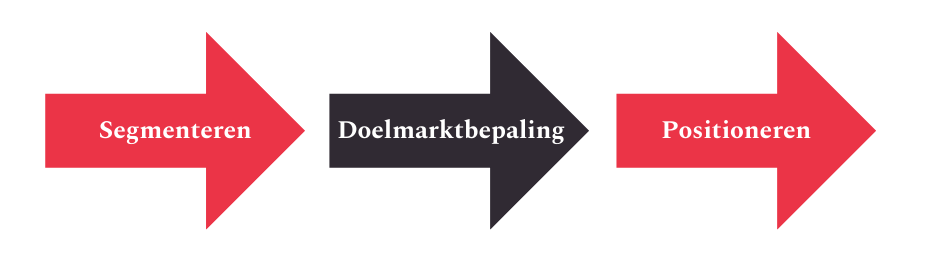
The first part of the target audience segmentation model is segmentation. Segmentation involves dividing your customer base into smaller groups with the same needs and characteristics. You then draw up a marketing strategy specifically for these target groups, tailored to the sub-groups. If you run a business in the footwear industry, you could choose to segment by gender, but also by age. It sounds very logical, but doing so makes the messages you send out much more appealing to the various sub-segments.
Once you have divided the market into different segments, you need to assess which segments are of interest and which are not. Accessibility and size are of great importance here. To determine which strategy is most effective for reaching customers, it is possible to combine various marketing tools. There are three useful strategies:
The final element of the target audience segmentation model is positioning. Your positioning is all about identity and image. For example: you sell products that are sustainable, not tested on animals and contribute to a better environment. You then ensure these characteristics are consistently reflected by, for instance, using images and text in campaigns and adverts that reinforce this identity and image.
Would you like to start using target audience segmentation for your business, but find it difficult to figure this out on your own? Get in touch with us – we’d be happy to see how we can help you!




Our team is
ready to help you

